
Canada Visitor Visa vs Study Permit: Canada offers different immigration options based on how long you plan to stay and the purpose of your visit. Choosing the correct visa is essential, especially with stricter immigration rules coming into effect in 2025.
-
Short visits for tourism or family → Visitor Visa
-
Short-term or long-term education → Study Permit
-
Business meetings or events → Business Visitor Visa
Understanding these options can help you avoid application errors and delays.
Visitor Visa vs Study Permit
If you plan to study in Canada, you must apply for a study permit, even for long academic programs.
If you plan to visit family, attend events, or travel, a visitor visa is the correct choice.
International students must meet academic and language proficiency requirements. Preparing for language tests such as CELPIP is important, and CELPIP practice materials are available on CELPIP preparation platforms.
What Is a Canada Visitor Visa?
A visitor visa is issued by Canadian immigration authorities to allow foreign nationals to enter Canada temporarily.
Key Features of a Visitor Visa
-
Allows short-term stays only
-
Does not permit work or study
-
Valid for up to 10 years or until passport expiry
-
Each visit allows a stay of up to 6 months
-
Final length of stay is decided by a border officer
Citizens of visa-required countries must apply for a visitor visa, while visa-exempt travelers need an Electronic Travel Authorization (eTA).
Types of Canada Visitor Visas
Visitor visas are categorized based on entry frequency and purpose of travel.
Entry-Based Visitor Visas
Single-Entry Visitor Visa
-
Allows entry into Canada once
-
New visa required after leaving Canada
-
Suitable for one-time trips or events
Multiple-Entry Visitor Visa
-
Allows multiple entries during validity
-
Most common visitor visa type
-
Valid up to 10 years or until passport expiry
Visitor Visas Based on Purpose
Tourist Visa
-
For tourism, sightseeing, or visiting family and friends
-
Does not allow work or study
-
From May 7, 2025, approvals will be limited to genuine tourism and family visits only
Business Visitor Visa
-
For meetings, conferences, and short training
-
No employment allowed in Canada
-
Stricter checks begin in May 2025 to prevent misuse
Super Visa
-
For parents and grandparents of Canadian citizens or permanent residents
-
Multiple entries for up to 10 years
-
Stay up to 5 years per visit
-
Requires:
-
Private medical insurance
-
Proof of sponsor’s income
-
Transit Visa
-
Required for travelers passing through Canada to another country
-
Usually free
-
Valid for up to 48 hours
Important 2025 Visitor Visa Updates
-
Stronger checks on temporary intent
-
Reduced misuse of visitor visas for work or study
-
Visitors already in Canada can now apply for a new visitor visa if they plan to exit and re-enter
What Is a Study Permit?
A study permit allows international students to study in Canada at a Designated Learning Institution (DLI) for programs longer than six months.
Study Permit Basics
-
Required for most international students
-
Must be obtained before arriving in Canada
-
Often issued with a TRV or eTA
-
Valid for program duration plus 90 extra days
Types of Study Permits
Study permits vary based on age and education level.
Post-Secondary Study Permit
Required for:
-
Colleges
-
Universities
-
Vocational institutions
Requirements
-
Letter of Acceptance from a DLI
-
Provincial Attestation Letter (PAL) (mandatory from 2024)
-
Proof of funds
-
CAD 22,895 required for living expenses from September 2025
-
Work Rights
-
Up to 20 hours/week during studies
-
Full-time work during scheduled breaks
Primary and Secondary Study Permit
-
For elementary and high school students
-
Minor students must:
-
Have a custodian, or
-
Live with a parent or legal guardian
-
-
No work rights for students
Study Permit for Minors
-
For children below the legal age in their province
-
Additional documents required:
-
Parental consent
-
Custodianship declarations
-
-
Accompanying guardians must apply for a visitor visa
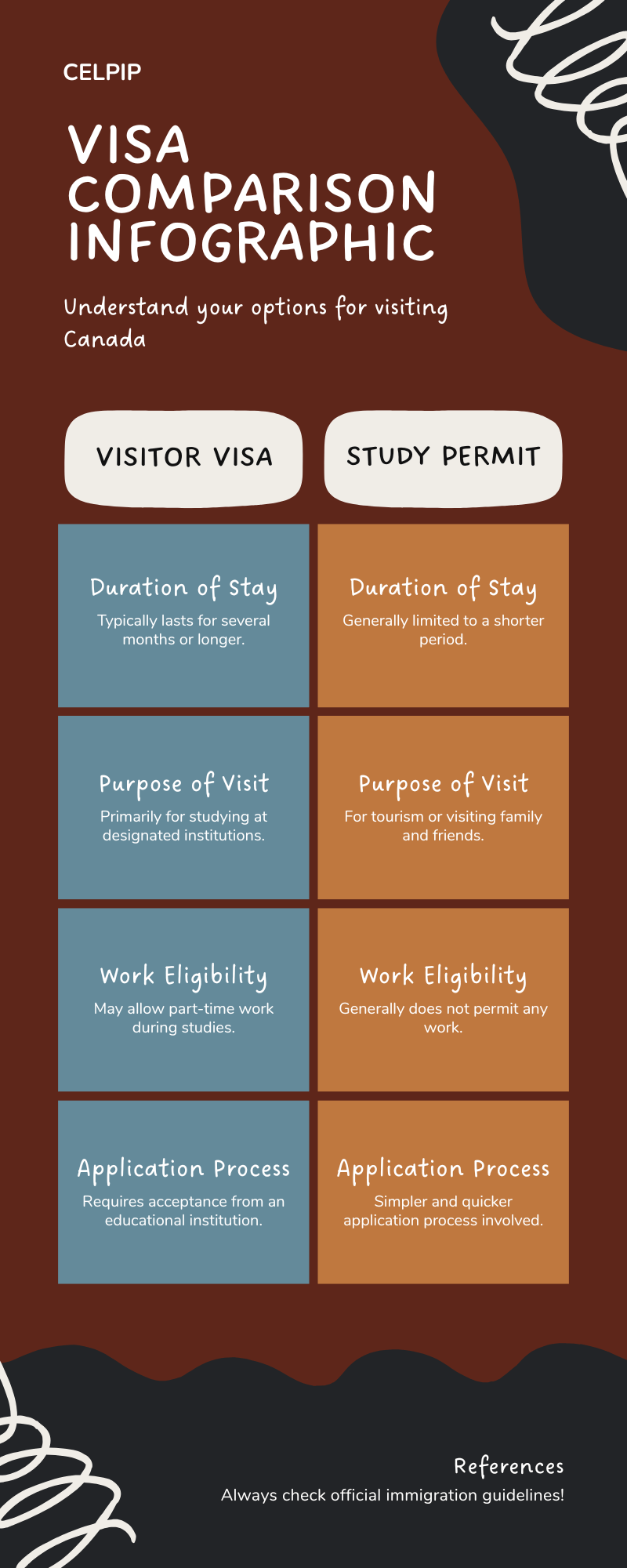
Different Types of Study Options in Canada
Canada offers flexible study options depending on the length of your course and your current immigration status. Choosing the right option is important, especially with new IRCC rules in 2025.
Short-Term Study (No Study Permit Required)
You do not need a study permit if your course duration is six months or less.
You can study in Canada if:
-
You hold a valid visitor visa or eTA
-
The course is short-term (language programs, certifications, or training)
This option is suitable for:
-
Language courses
-
Skill-based certifications
-
Short academic programs
You cannot extend studies beyond six months without applying for a study permit.
Studying While Waiting for a PGWP Decision
If you are:
-
Still completing your studies, or
-
Waiting for a decision on your Post-Graduation Work Permit (PGWP)
You must maintain valid legal status in Canada, such as:
-
A visitor record, or
-
Authorized work status (if eligible)
Failure to maintain status can affect future immigration applications.
IRCC Updates for 2025: What’s New?
IRCC has introduced major changes for international students in 2025:
-
Study permit cap:
-
437,000 permits available (10% fewer than 2024)
-
-
Stricter LOA verification:
-
Only genuine Letters of Acceptance will be accepted
-
-
New rule for changing schools:
-
From November 8, 2024, a new study permit is required when switching institutions
-
-
PGWP restrictions:
-
Some programs are no longer eligible
-
-
Higher financial requirement:
-
Minimum funds increased to CAD 22,895
-
These changes aim to protect students and improve transparency.
Visitor Visa vs Study Permit: Key Differences (IRCC Rules)
Purpose
-
Visitor Visa: Tourism, business, family visits, transit
-
Study Permit: Full-time studies at a Designated Learning Institution (DLI)
Duration of Stay
-
Visitor Visa: Up to 6 months per visit
-
Study Permit: Program length + 90 days
Entry Document
-
Both require a TRV or eTA (based on nationality)
Work Rights
-
Visitor Visa: Not allowed (except business activities)
-
Study Permit: Up to 20 hours per week
Flexibility
-
Visitor Visa: High flexibility
-
Study Permit: Institution-specific; changes require a new permit
Visitor visas are short-term and flexible, while study permits are structured and education-focused.
Who Is Eligible for a Canada Visitor Visa?
Applicants must show:
-
Clear temporary intent
-
Enough funds for the trip
-
Strong ties to the home country
-
No serious criminal or medical issues
Super Visa Requirements (If Applicable)
-
Proof of private medical insurance
-
Meeting minimum income requirements of the sponsor
In 2025, IRCC places stronger emphasis on genuine visitor intent.
Who Is Eligible for a Study Permit?
To qualify, applicants must provide:
-
Valid Letter of Acceptance (LOA) from a DLI
-
Provincial Attestation Letter (PAL) (for colleges/universities)
-
Proof of funds (minimum CAD 22,895)
-
Proof of intent to leave Canada after studies
-
English or French proficiency (e.g., CELPIP)
-
Custodianship proof for minor students
Study permit approvals may be limited further due to provincial caps.
Importance of Language Tests (CELPIP)
Language proficiency is essential for study permit approval.
CELPIP proves that you can:
-
Understand lectures
-
Communicate effectively
-
Integrate into Canadian society
Celpip.biz offers focused practice and preparation to help you reach the required score confidently.
How to Apply for a Canada Visitor Visa
Step-by-step process:
-
Check eligibility using the IRCC tool
-
Prepare documents:
-
Passport
-
Photos
-
Proof of funds
-
Invitation letter (if applicable)
-
-
Apply online or via Visa Application Center
-
Pay fees:
-
CAD 100 (visa)
-
-
Biometrics and processing (2–4 weeks)
-
Receive approval letter
How to Apply for a Study Permit
Application steps:
-
Obtain LOA and PAL
-
Prepare documents:
-
Passport
-
Proof of funds
-
Photos
-
-
Apply online
-
Pay fees:
-
CAD 150 (permit)
-
CAD 85 (biometrics)
-
-
Medical exam (if required)
-
Processing time: 8–12 weeks
-
Study permit issued at port of entry
Under specific conditions, both applications can be made from inside Canada.
Pros and Cons
Visitor Visa
Pros
-
Easy to apply
-
Ideal for short visits and tourism
Cons
-
No long-term study or work
-
Risk of refusal if intent is unclear
Study Permit
Pros
-
Allows part-time work
-
Pathway to PGWP and PR (Express Entry)
Cons
-
Higher cost
-
Strict rules and program limits
-
New permit required if changing schools
Switching from Visitor Visa to Study Permit
-
Long-term study is not allowed on a visitor visa
-
A study permit is mandatory
-
Most applications must be made outside Canada
-
Study permit holders may still need a TRV to re-enter Canada after travel
Final Thoughts
Visitor visas are ideal for short stays, while study permits are essential for long-term education and future settlement in Canada.
With stricter IRCC rules in 2025, careful planning, strong documentation, and solid language skills are more important than ever.
A strong CELPIP score significantly improves your chances of approval.
Celpip.biz supports your preparation journey so you can move to Canada with confidence.