
Studying abroad is an exciting experience full of new challenges and opportunities. For many international student in Canada, having a car provides convenience, independence, and the freedom to explore this beautiful country.
However, buying a car in a new country can feel overwhelming due to different rules, paperwork, and unfamiliar processes. This guide breaks everything down clearly so international students can make confident decisions.
Whether you’re studying in Toronto, British Columbia, Quebec, or any other province, here’s what you need to know to buy a car in Canada easily.
Step-by-Step Guide for International Students
1. Understand the Legal Requirements
Before buying a car, make sure you know the legal rules for international students:
Driver’s License
You must have a valid driver’s license to drive legally in Canada.
An international license is usually valid for a limited time.
For long-term stays, applying for a Canadian driver’s license is recommended.
Car Insurance
Car insurance is mandatory in Canada.
You cannot register or drive your car without insurance.
Insurance costs depend on:
Age
Driving experience
Car model
Province
Vehicle Registration
After buying a car, you must register it with the provincial/territorial authority.
You’ll need:
Proof of ownership
Proof of insurance
Identification
Registration fees
2. Research and Budget
Before selecting a car, think about your needs.
Factors to Consider
Fuel efficiency
Size and comfort
Weather conditions (important for winter driving)
Terrain and travel distance
New vs. Used
New cars: Reliable, under warranty, but more expensive.
Used cars: Affordable but may require more maintenance.
Budgeting
Include:
Car price
Insurance
Registration fees
Maintenance/repair costs
3. Choose the Right Car
Where to Buy
Dealerships: Offer certified cars, financing options, and professional advice.
Online Platforms:
AutoTrader
Kijiji
Craigslist
Browse listings, compare prices, and contact sellers directly.
Inspect Before Buying
If buying used, get a mechanic inspection to avoid hidden problems.
4. Negotiate the Price
Know the Car’s Market Value
Look up the current market value using online tools. This helps you negotiate fairly.
Negotiation Tips
Highlight repair issues or defects to reduce the price.
Stay polite but firm.
Don’t rush take your time to make an informed decision.
5. Explore Financing Options
Cash Purchase
Pay the full amount upfront—simple and no interest.
Car Loans
Banks and credit unions offer loans to international students with:
A valid Canadian bank account
Proof of income or a co-signer
Compare interest rates and loan terms.
Leasing
Monthly payments are lower.
You return the car after the lease period or choose to buy it.
Good if you prefer upgrading to newer models.
6. Finalize the Purchase
Key Steps
Bill of Sale: Provided by the seller; includes price, vehicle details, and signatures.
Transfer Ownership: Visit the local transportation office with:
Bill of sale
Insurance proof
Identification
Pay Required Fees:
Taxes
Registration fees
Transfer charges
7. Get Car Insurance
How to Get Insured
Contact multiple insurance companies for quotes.
Compare prices and coverage.
Types of Coverage
Liability
Collision
Comprehensive
Uninsured motorist protection
8. Maintain Your Car
Regular Maintenance
Follow the manufacturer’s recommended schedule.
Keep the car in good condition to avoid expensive repairs.
Winter Safety Tips
Use winter tires.
Keep emergency supplies like blankets, flashlights, and a first-aid kit.
9. Know the Rules of the Road
Learn local driving laws, which may differ from your home country.
Follow speed limits, parking rules, and safety regulations.
Conclusion
Buying a car in Canada as an international student may seem challenging, but with proper research and preparation, it becomes a smooth experience. From understanding legal requirements to negotiating prices and getting insurance, every step is important.
Owning a car gives you freedom to explore Canada’s cities, countryside, and scenic routes. Stay safe, maintain your car, and follow the rules of the road to enjoy a stress-free driving experience during your study journey.
Common Questions About Buying a Car in Canada
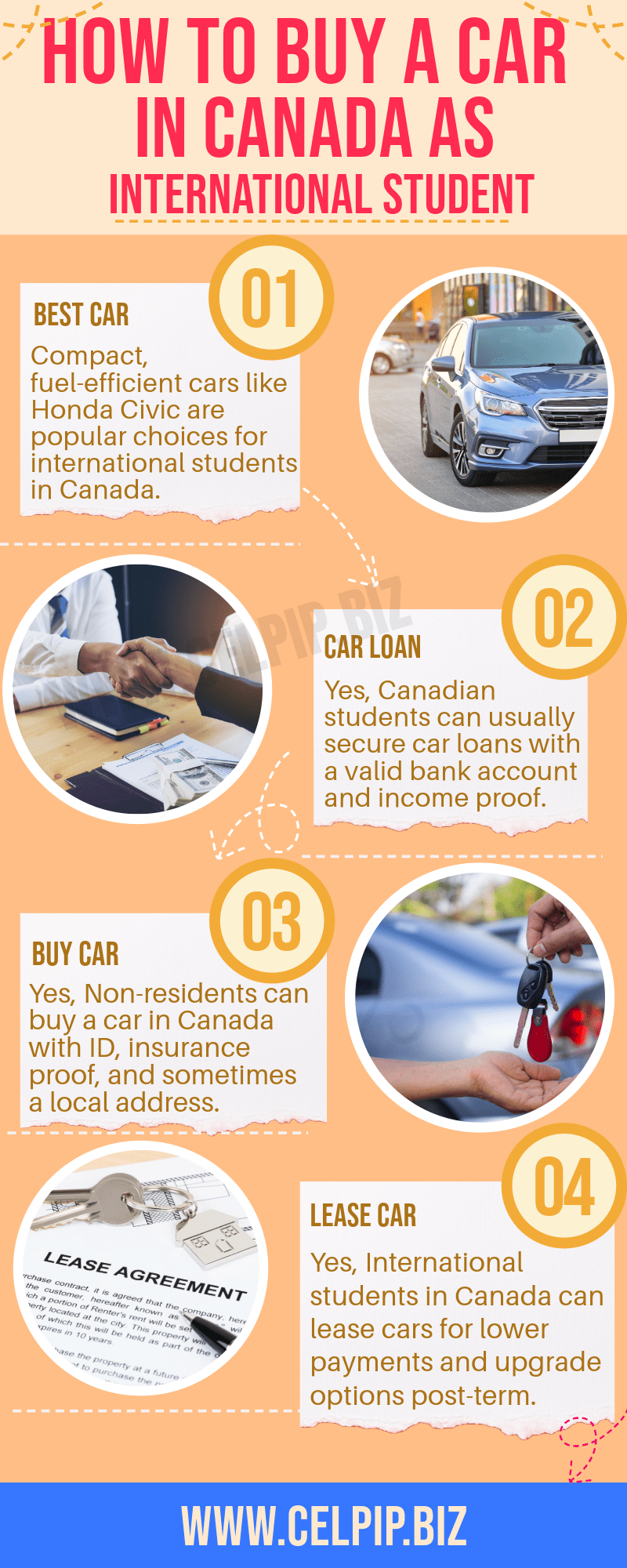
1. What kind of car is best for international students?
Small, fuel-efficient, reliable cars such as:
Honda Civic
Toyota Corolla
Mazda3
These are affordable and great for students.
2. Can a student in Canada get a car loan?
Yes. Students can get loans if they meet requirements like:
Canadian bank account
Proof of income
SIN
Possibly a co-signer
3. Can a non-resident buy a car in Canada?
Yes, but requirements vary by province.
You may need:
Canadian address
Insurance
ID documents
4. Can international students lease a car?
Yes, Leasing offers lower monthly payments and flexibility to change cars later.