
How do you tell Immigration Canada? There are times when people break the rules or laws set by Immigration Canada.
If you suspect fraud, illegal work, or other violations, it’s important to know how to report them to keep the immigration system honest.
The immigration system in Canada is meant to welcome people who will help the country while making sure that everyone follows the rules.
Reporting violations helps protect the rights and chances of people who follow the immigration process correctly, as well as upholding these laws.
Anyone who finds out about possible violations needs to know how to report someone to Immigration Canada.
This article’s goal is to give you a clear guide on how to make a report, what kinds of violations to report, and why it’s important to report things accurately and on time.
In the next parts, we’ll talk about the exact steps, kinds of violations, and why it’s important to tell Immigration Canada about these things.
What is a Fraud Alert in Canada?
Canada is known for being friendly to immigrants, and it has set up rules to make sure its immigration system is fair.
People may try to take advantage of this system or break immigration laws, though.
In these situations, it’s important to know how to report someone because immigration fraud is a big problem that affects people who want to move to the US and those who are already living here.
Anyone going through Canada’s immigration process needs to know about the different kinds of fraud and how to protect themselves.
Different Kinds of Immigration Fraud
Fake Job Offers: Scammers may promise immigrants work permits or permanent residency in exchange for money. These offers often look real because they have official-looking papers and complicated websites, but they are meant to trick people.
Ghost consultants, or “ghost consultants,” are immigration consultants who work without permission from the government. They might charge you a fee to guarantee quick immigration results. These people are not regulated, so they could take your money and leave you without the right paperwork.
Marriage Fraud: Some people may marry Canadian citizens or permanent residents only to get immigration status. This not only damages the integrity of the immigration system, but it also puts people at risk of serious legal problems.
Misrepresentation: It’s a crime to give false information on immigration applications. This includes lying about qualifications, making up family ties, or making up documents.
How to Avoid Immigration Fraud
Use Authorized Representatives: Only hire immigration lawyers, consultants, or notaries who are allowed to help you with immigration issues. These professionals are subject to rules and must answer for what they do.
Do your research. Check the credentials of anyone who offers immigration services. Look for licenses, certifications, and memberships in professional groups.
Be careful with promises that aren’t real. If an offer seems too good to be true, it probably is. Be careful with promises of guaranteed immigration or fast ways to get through the process.
Report Suspicious Activity: If you think someone is committing immigration fraud or have been a victim, let the authorities know right away. Call the Royal Canadian Mounted Police (RCMP) or the Canada Border Services Agency (CBSA).
Be careful about giving out personal and financial information to keep it safe. You will never get an email or phone call asking for sensitive information about official immigration forms and processes.
People who want to move to Canada for a better life are the targets of immigration fraud. We can all help keep ourselves and Canada’s immigration system safe by staying informed, using authorized representatives, and reporting anything that seems strange.
If something seems wrong or too good to be true, you should always look into it more before moving forward.
If you stay alert, you can stop other people from being scammed and make sure that everyone has a fair and just immigration process.
Types of Reports to Immigration Canada
Reporting to Immigration Canada is an important step in fighting different types of immigration fraud and making sure the immigration system is fair.
The reports talk about a lot of different problems, each one focusing on a different type of illegal or immoral behavior. These are some common kinds of reports:
Immigration services that are not real
Unauthorized Representatives: People who give immigration advice or services without getting permission from the Immigration Consultants of Canada Regulatory Council (ICCRC) or a Canadian law society.
Fake Job Offers: Reports of fake job offers made to people who want to move to Canada, promising them work in Canada in exchange for money.
False Promises: When unauthorized people or groups promise successful immigration outcomes, usually for a fee.
Misrepresentation
False Information on Applications: This happens when people give wrong or misleading information on their immigration forms or other documents that support their application.
Fake Documents: Reports of fake or forged documents sent in with immigration applications.
Marriage Fraud: When people think that people are getting married just to get a visa.
Working without permission
Undocumented Workers: Reporting people in Canada who are working without the right paperwork or a valid work permit.
Concerns about employers taking advantage of immigrant workers, such as paying them less, giving them bad working conditions, or not paying them at all.
Human Trafficking and Exploitation: Forced Labor—There have been reports of people being forced or coerced into working in Canada.
Sex Trafficking: There is reason to believe or proof that people are being trafficked into Canada for sexual exploitation.
Victims of Exploitation: Reports about immigrants who are at risk of being taken advantage of because of their immigration status.
Visa Fraud
Bogus Institutions: Reports about fake schools or programs that help people apply for visas.
Visa overstays happen when people stay in Canada longer than their visa or permit is good for.
Fraud in Refugee and Asylum
False Refugee Claims: There are reports of people making false claims for refugee protection.
Misuse of the asylum system: people are worried that some people are using the asylum system for their own benefit.
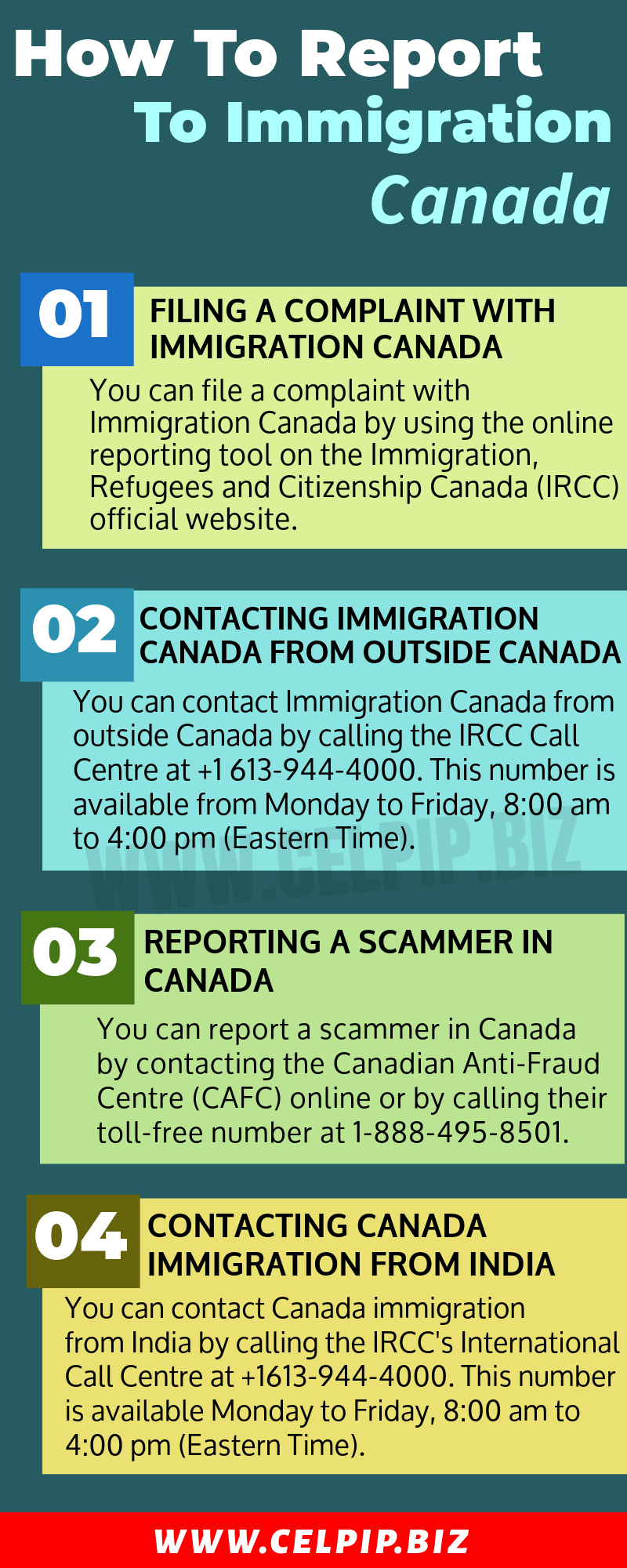
How to Tell Immigration Canada to Someone
There are a number of agencies and ways to tell the Immigration Department of Canada about some illegal activities. Here they are:
The Canada Border Services Agency (CBSA) is in charge of making sure that immigration laws are followed at ports of entry and in Canada. You can call the CBSA Border Watch Tip Line at 1-888-502-9060 to make a report.
Immigration, Refugees and Citizenship Canada (IRCC) is in charge of immigration programs and processing applications. You can report things online on the IRCC’s official website.
If you’re involved in serious immigration-related crimes like human trafficking or organized fraud, you should call the Royal Canadian Mounted Police (RCMP). You can call your local RCMP detachment or their non-emergency line to report something.
The Canadian Anti-Fraud Centre can help with any fraud-related issues, including immigration fraud. You can report online or by calling their toll-free number, 1-888-495-8501.
Local Police: If you are in immediate danger or see a crime happening, you must also call your local police department.
If you have specific questions or concerns about immigration fraud, it’s best to get in touch with the right authorities or talk to a qualified lawyer.
Why is it important to tell?
There are many reasons why you should report any suspicions of immigration fraud or other related crimes:
Protecting People Who Are Weak: Reporting can help keep weak immigrants from being taken advantage of and abused.
Keeping the Immigration System Honest: Canada’s immigration system stays honest by finding and stopping dishonest activities.
Stopping Criminal Behavior: Many cases of immigration fraud are connected to larger criminal activities like organized crime or human trafficking. Reporting helps stop these kinds of illegal activities.
Fairness and Compliance: Reporting makes sure that people who follow immigration laws don’t get hurt by people who try to cheat the system.
Reporting suspicious activities that might be related to immigration fraud is very important for protecting people, the immigration system, and the community as a whole.
Timely reporting helps authorities take action against people who want to abuse the system, whether it’s through fake job offers, lying on applications, or taking advantage of immigrants who are vulnerable.
Immigration Canada starts looking into the matter as soon as a report is sent in. Interviews, document reviews, and other methods are used in this investigation to get information.
You can be sure that all the information in the report is kept secret. Immigration Canada respects the privacy of both the person who reported the crime and the people involved.
Conclusion
Reporting someone to Immigration Canada is very important for keeping the immigration system honest and keeping people safe from fraud and exploitation.
People can help make immigration fair and just by knowing about the different kinds of problems that can be reported, such as fake job offers, lying about job offers, illegal employment, and human trafficking.
Every report made to the Canada Border Services Agency (CBSA), Immigration, Refugees and Citizenship Canada (IRCC), Royal Canadian Mounted Police (RCMP), Canadian Anti-Fraud Centre, or local law enforcement helps protect the rights of immigrants and keep Canada’s immigration processes honest.
Through vigilance, timely reporting, and a commitment to honesty, we collectively work towards a system that welcomes newcomers while deterring those who seek to abuse it.
Questions that are often asked (FAQs)
Q1. What is the process for making a complaint to Canadian immigration?
On the official website of Immigration, Refugees and Citizenship Canada (IRCC), you can use the online reporting tool to file a complaint.
Q2. How can I get in touch with immigration Canada if I’m not in Canada?
If you’re not in Canada, you can reach Immigration Canada by calling the IRCC Call Center at +1 613-944-4000. You can call this number from Monday to Friday between 8:00 am and 4:00 pm Eastern Time.
Q3. How do I tell the police about a scammer in Canada?
You can tell the Canadian Anti-Fraud Centre (CAFC) about a scammer by going to their website or calling their toll-free number at 1-888-495-8501.
Q4. How do I get in touch with Canadian immigration from India?
If you live in India and need to get in touch with Canadian immigration, you can call the IRCC’s International Call Centre at +1 613-944-4000. You can call this number from 8:00 AM to 4:00 PM Eastern Time, Monday through Friday.